
The prompts behind every Gumshoe audit
- Two distinct prompt types: open-ended visibility prompts and engineered sentiment prompts, matched to each audit
- Written in your buyers' voice as real persona-style questions, not generic keywords
- A platform-wide methodology applied across every audit and every major AI model
How Gumshoe turns buyers into prompts
Prompts are only useful if they match how real buyers ask. Here is how Gumshoe builds them.
Start From Your Personas
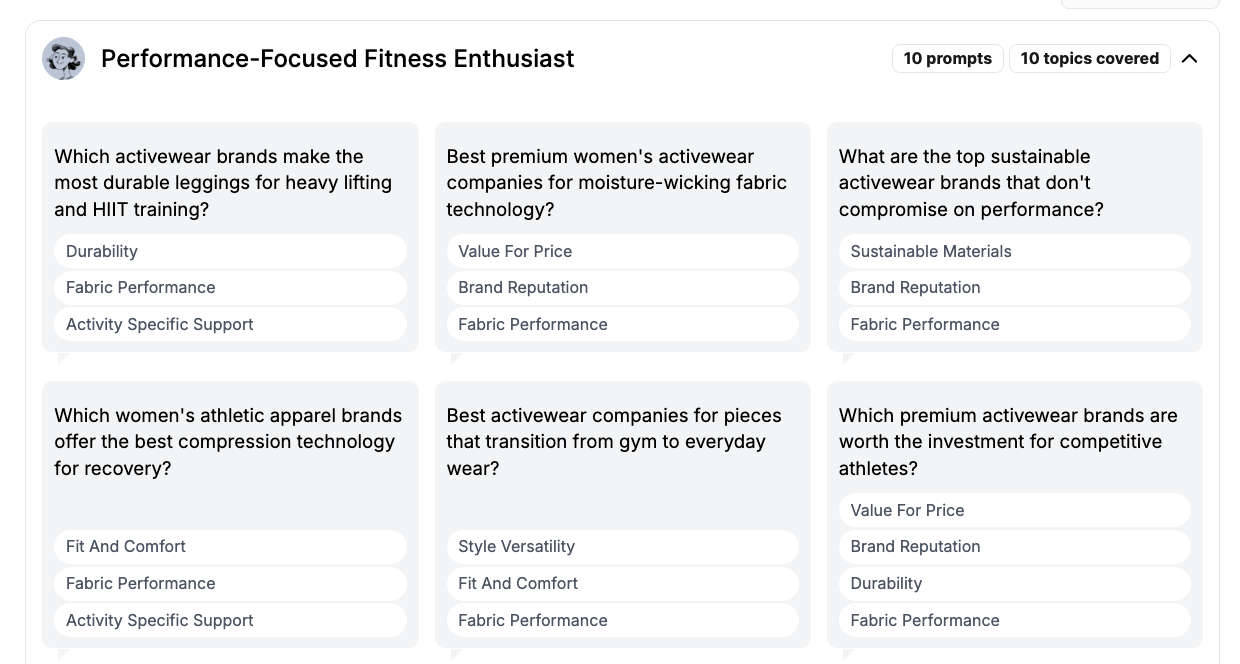
Every prompt begins with a real buyer persona and the goals, questions, and pain points that come with it
Map the Topics That Matter
Gumshoe pairs each persona with the topics they care about, from pricing and features to trust and support
Generate Natural Prompts
Persona and topic combine into the kind of questions a real buyer would actually ask AI, not generic keywords
Run Them Across Models
Hundreds of prompts run through every major AI model so you see the full range of answers your buyers get
Turn Answers Into Visibility
Gumshoe measures how often, and how well, your brand shows up across those prompts and reports it back
Two kinds of prompts, one methodology
The prompt decides what AI will reveal. Gumshoe uses a different, purpose-built prompt set depending on what an audit needs to measure.
Visibility prompts
Open-ended. No brand names.
Visibility prompts ask the way a buyer searches before they have picked anyone. They never mention a company, so AI is not led toward any answer and you see which brands it recommends on its own.
Sample visibility prompt
"What are the best activewear brands for hot yoga and boutique fitness classes?"
Used in the Visibility, Content, and Citation audits
Sentiment prompts
Direct and head-to-head.
A standard visibility audit almost always looks positive, because open prompts rarely invite criticism. Sentiment prompts are engineered differently: direct brand-mention questions and head-to-head comparisons that give AI room to reveal what it actually thinks, good and bad.
Sample sentiment prompt
"What do reviewers say is wrong with Lululemon's leggings, and is Alo Yoga a better pick?"
Used in the Sentiment Audit
Every prompt speaks in your buyer's voice
Prompts are not written by us in marketing language. Each one comes from a synthetic buyer persona, phrased the way that buyer actually talks to AI.

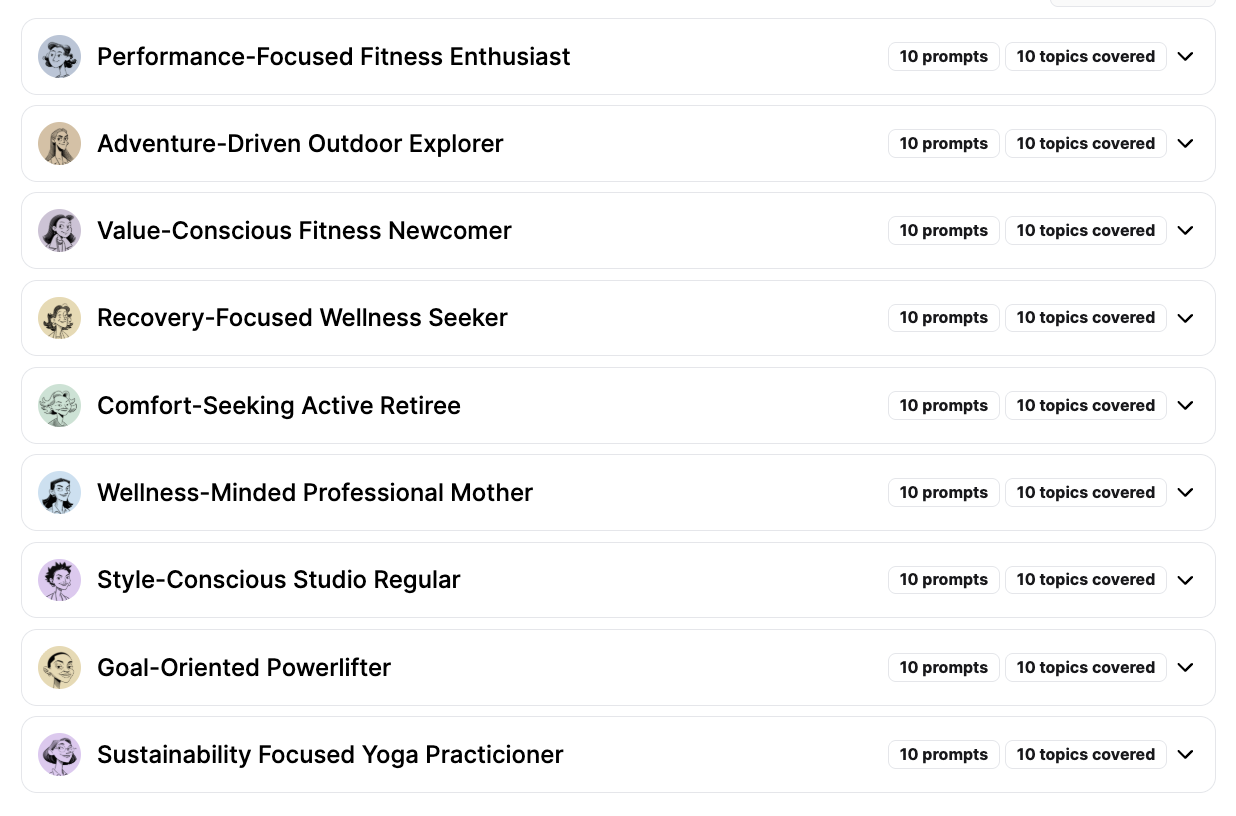
Performance-Focused Fitness Enthusiast
"I lift heavy and do HIIT six days a week. Which brands make leggings that hold up to squats and don't go sheer?"

Value-Conscious Fitness Newcomer
"I'm just starting to work out and on a budget. Which activewear brands give the best value without falling apart?"

Adventure-Driven Outdoor Explorer
"I trail run and hike in changing weather and care about sustainable materials. What women's activewear should I look at?"
Bad prompts produce bad insights
Most tools run shallow, keyword-style prompts, then report on shallow answers. Here is the gap between a typical competitor prompt and a Gumshoe prompt.
Competitor examples are illustrative placeholders, to be replaced with anonymized real prompts.
AI answers are only as good as the questions behind them
Gumshoe studied how models actually respond, then engineered a prompt methodology to get the truth, not a flattering headline. Most tools just run keywords. That is the difference between knowing how AI sees your brand and guessing.
Frequently Asked Questions
What's the difference between visibility and sentiment prompts?
Why would a standard visibility audit always look positive?
Who writes the prompts?
Can I edit or add prompts?
See what AI tells your buyers
Your first persona-driven Visibility Audit is free.
Free to start · No credit card required