How Gumshoe Works
Every Gumshoe Visibility Audit rests on three structural advantages. Most GEO tools stop at measurement. Gumshoe shows you what is wrong, why, and how to fix it.
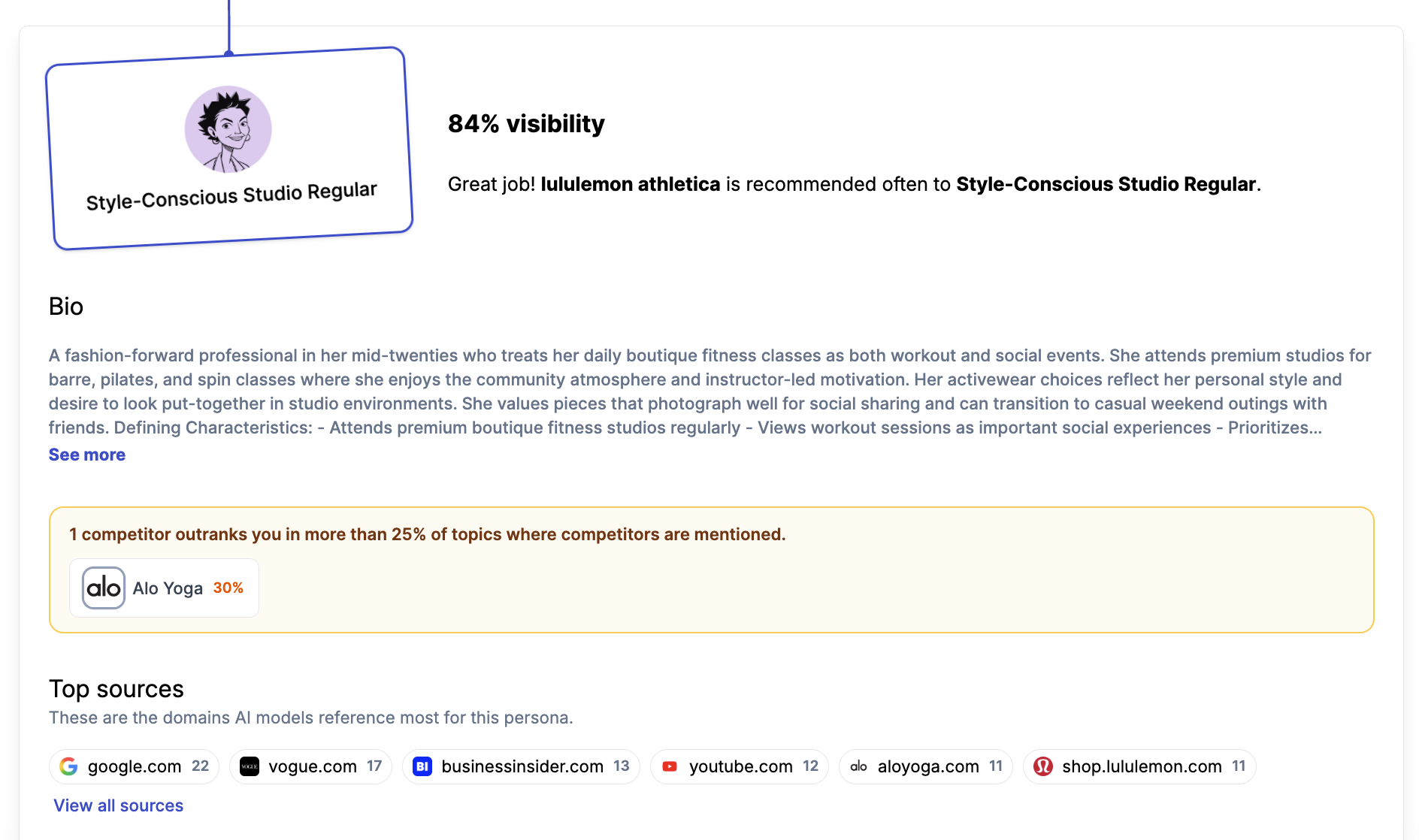
Persona-driven
AI tailors answers to who is asking, so we test as your real buyers, not a generic prompt.
Official APIs
The only compliant way to simulate logged-in personalization at scale.
Action built in
The same audit that finds where you are invisible shows you how to fix it.
Published Jun 2025 · Updated Apr 2026
Why Methodology Matters
AI model responses are non-deterministic. That is a technical way of saying the same question, asked twice, produces different answers. Different brands get mentioned. Different sources get cited. Different recommendations emerge.
This is not a bug. It is how large language models work. They are probabilistic systems, meaning every answer is a weighted likelihood rather than a fixed lookup. And it has a direct consequence for measurement: if your methodology does not account for that variability, your data is meaningless.
A single ChatGPT screenshot is not data. It is an anecdote. Building a GEO (Generative Engine Optimization) strategy on anecdotes is the fastest way to waste time and budget on the wrong priorities.
The good news is that variability is tractable. Individual answers shift run to run, but the proportion of responses where a brand appears converges to a stable signal once you run enough conversations. Visibility behaves like a well-defined probability that can be estimated with standard statistical tools. See our blog article, Exploring Variability in AI-Generated Responses: Consistency or Chaos?, for more detail.
Everything about how Gumshoe is built is designed to turn a probabilistic system into statistically reliable data you can actually act on.
Personas: How We Get a Real Answer Back
If you, your grandmother, and your 13-year-old niece all asked an AI model the same question, you would get three very different answers. The model factors in who is asking, what it knows about them, and what it thinks they care about. Without persona context, you are not getting an accurate read on what your buyers see. You are getting an averaged answer for a person who does not exist.
This is why every Gumshoe audit starts with personas.
We go to AI models and ask who is most likely to be researching your brand or category. They come back with specific buyer profiles, grounded in real situations rather than broad labels like "small business owner." You review them, edit any that do not fit, and confirm they reflect your actual buyers. Then we run hundreds of conversations as those personas, querying every model in their voice, with their context built in.
Other GEO tools either skip personas entirely or label prompts after the fact based on who they guess might have asked. Without persona context built into the question itself, you are running anonymous, logged-out queries that produce more hallucinations and less specific answers. Those tools have to run thousands of generic prompts to average out the noise, and even then, they are measuring the average answer for an average person, which is not a person who exists. Gumshoe builds the persona first and gives the model that context up front, so every conversation reflects what a real buyer in your category sees.






Every Gumshoe audit is built on personas generated for your brand and grounded in real buyer situations, not generic averages.
Visibility profiles per persona
The same brand can show up 60 percent of the time for one buyer and 5 percent for another. Persona-level data is where the most actionable insights live.
Alignment gaps
When the AI-generated personas do not match who you think you sell to, that is not noise. It is a signal that the models do not understand your business, and a clear direction for what to fix.
What logged-in users actually see
Most AI usage happens behind a login, with memory, custom instructions, and conversation history all shaping the answer. Persona-driven testing through APIs is the only way to replicate that experience at scale. Visit How APIs Unlock Better Insights Into AI Search Visibility for more details.
API Access: The Only Compliant Way to Get Clean Data at Scale
Imagine trying to study how a restaurant cooks its signature dish by watching through the kitchen window. You would catch fragments, miss the ingredients you cannot see, and your view would change every time someone walked in front of the glass. That is browser scraping. It tells you something, but not enough, and not reliably. APIs let us walk through the front door with permission and ask the chef directly.
This is why every Gumshoe audit runs through official APIs.
We connect to every AI model through its official API (the structured, permissioned way developers connect software to a model). Through that channel, we can engineer system messages that replicate real user behavior: memory, custom instructions, conversation history, and persona context. The data comes back clean, structured, and free of interface contamination. Gumshoe also validates against the native interfaces to confirm we are seeing what real users see.
Other GEO tools rely on browser scraping, which automates a real browser to read AI answers the way a person would. That approach violates most models' terms of service and pulls in personalization, caching, and UI artifacts that pollute the data. To replicate logged-in personalization, scraping tools need sock puppet accounts (fabricated identities with maintained history and activity), which are detected with 89-95 percent accuracy and are ethically questionable to operate. The productive question in this space is not "API versus scraping." It is whether you can engineer API calls to replicate interface behavior while gaining the nuance of personalized results. We have built our entire methodology around that approach, so Gumshoe data reflects what real users actually experience.
Browser Scraping
- Violates most models' terms of service
- Data polluted by personalization, caching, and UI artifacts
- Breaks when providers change their UI
- Not auditable or reproducible
API Access (Gumshoe)
- Fully compliant with model provider terms
- Clean, structured data with no UI contamination
- Stable against provider UI changes
- Fully auditable and reproducible
A few things this approach gives you that scraping cannot:
Compliance and stability
Fully aligned with every model provider's terms, and stable against UI changes that would break a scraper overnight.
Logged-in personalization at scale
System-message engineering lets us replicate the memory, custom instructions, and conversation context that shape what real buyers see, without needing sock puppets.
Auditable, reproducible data
Another team running the same test should get the same statistical picture. That is what makes the data defensible. Visit How APIs Unlock Better Insights Into AI Search Visibility for more details.
How We Handle Variability
Ask an AI model the same question ten times, and you might get ten different answers. Different brands mentioned. Different sources cited. Different recommendations emerging. Trying to draw conclusions from a single run is like calling a coin biased after one flip. The variability is real, and it is the hardest problem in measuring AI visibility.
This is why every Gumshoe audit is built on breadth and statistical aggregation, not single snapshots.
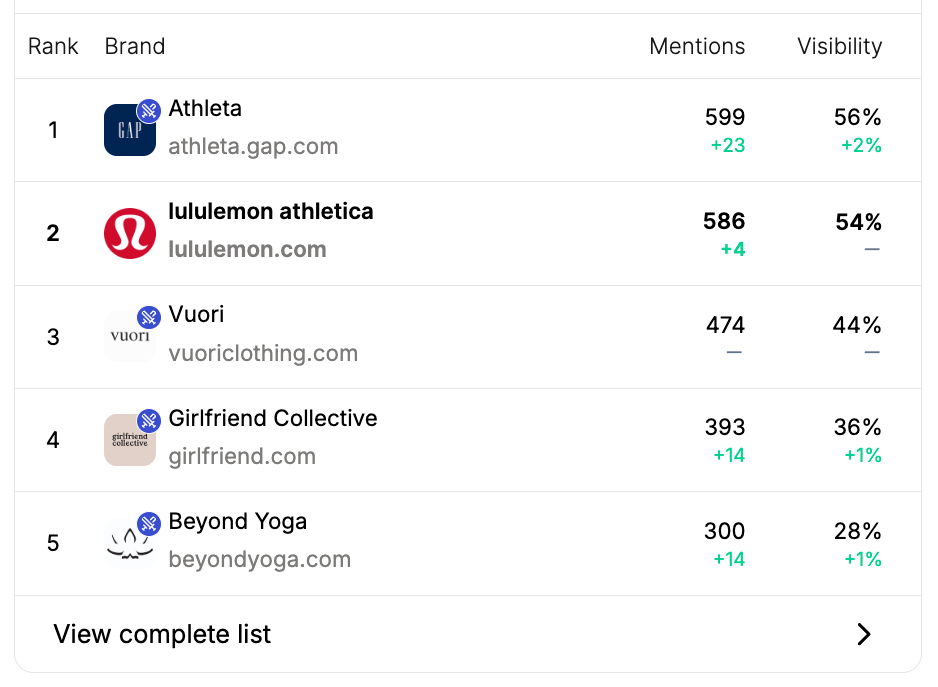
Every audit spans three dimensions: a set of prompts (the questions your buyers actually ask), a set of personas (the buyers who ask them), and a set of models. A single evaluation across all combinations is a single audit run. The default configuration produces enough conversations per run to estimate your overall visibility within ±5 percentage points at 95 percent confidence. That is a defensible statistical claim, not a marketing one. Individual conversation results are then aggregated across all prompts for a persona, across all personas in the audit, and across all models you are tracking. The final visibility score represents the probability that your brand appears in AI responses for your target audience, rather than a cherry-picked example. Visit How Much Data Do You Need to Measure AI Visibility with Confidence? for the math.
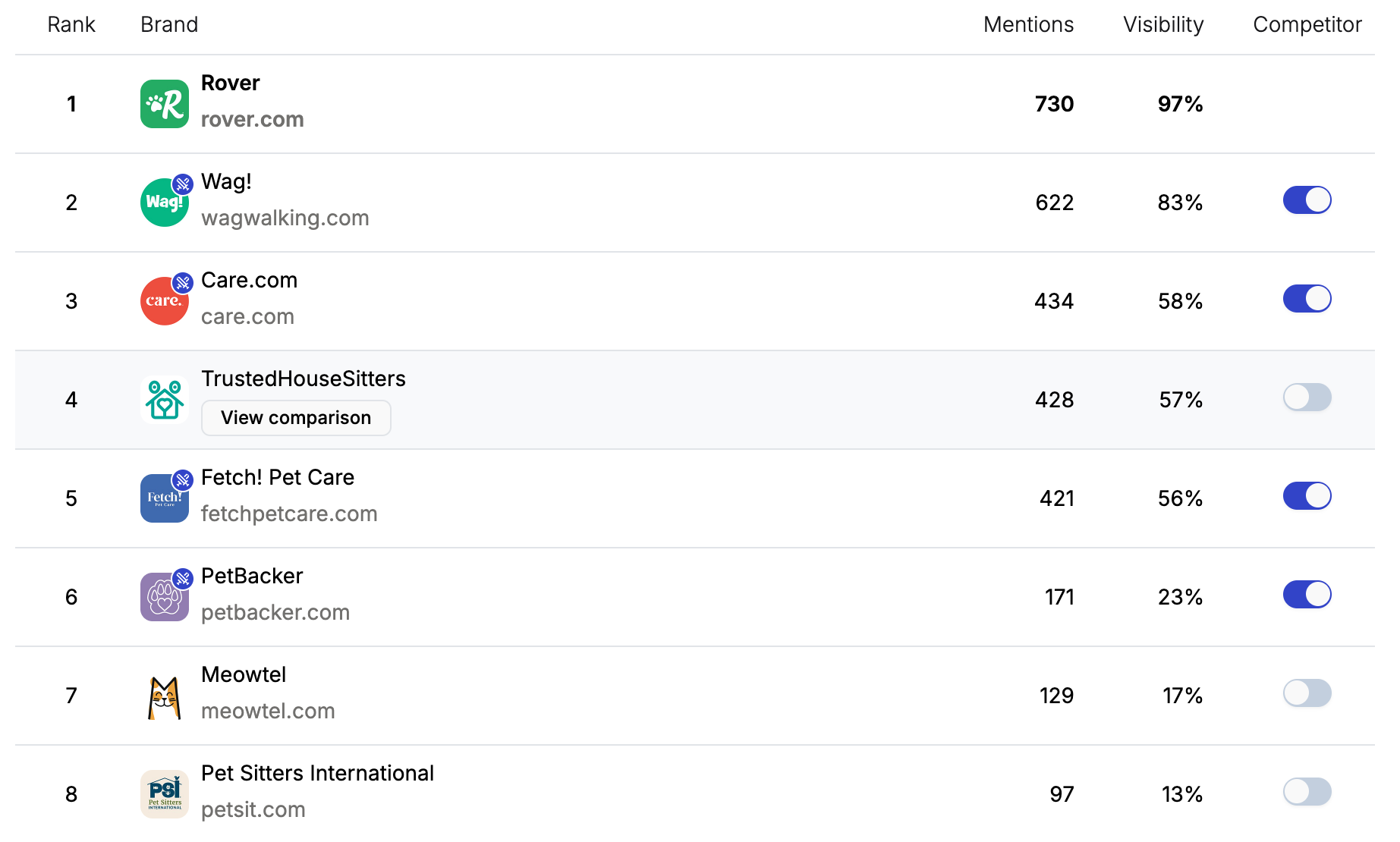
Other GEO tools run thousands of generic prompts and return a single averaged number with no breakdown. Gumshoe gives you a defensible overall score and the underlying structure to slice into it: by persona, by topic, by model. A single run gives a strong directional signal at the overall level. Per-topic and per-persona breakdowns have wider confidence intervals, and we recommend multiple runs when those slices need to drive a decision.
A statistically grounded baseline
±5 pp at 95 percent confidence on your overall visibility score, every time.
Trend lines, not screenshots
Every audit is a timestamped snapshot. Run them on a schedule (weekly, monthly, or wherever your pace of change lands) and you can tell real movement apart from noise.
Tighter confidence when you need it
Running audits on a schedule further narrows the confidence interval, so when you need to make decisions at the topic or persona level, you can collect more data without changing tools. Visit Exploring Variability in AI-Generated Responses: Consistency or Chaos? for more on how variability behaves at scale.
Visibility Scoring: How the Numbers Work
Mention rate
Was your brand mentioned at all? The most basic signal. You either show up in an AI's answer for a given prompt, or you do not. Aggregate that across every conversation in your audit, and you get your overall visibility score.
Recommendation ranking
When AI models recommend a set of options, where does your brand land in the order? First recommendation or the afterthought at the bottom? Position matters. A brand mentioned 80 percent of the time but always listed last is in a different place than a brand mentioned 40 percent of the time but always recommended first.
Citations
When AI models back up their answers with sources, which domains are they pulling from? Citations are a separate signal from mentions. Your brand can be mentioned without your own site being cited, and your competitors can be recommended without their sites being cited either. The Sources view makes this visible and is one of the most actionable parts of your audit.
Action Built In, Not Just Tracking
Most GEO tools tell you where you are invisible. Gumshoe tells you why and gives you the tools to fix it inside the same platform. You can use three levers to take action and change your AI visibility.
Technical Audit
Crawlability, schema, structured data, page layout, and metadata are evaluated on a page-by-page basis. This surfaces the technical issues that prevent AI models from reaching and parsing your site in the first place.
Content Audit and generation
Gumshoe maps your site's existing content against the topics and personas in your audit, showing you exactly where coverage is thin or missing. From there, you can generate FAQs, knowledge articles, comparisons, and how-tos directly from the gaps, written in a voice tuned for AI retrieval.
Sources and citation analysis
The Sources view aggregates and categorizes every domain AI cites in your category. You can see which sites your competitors dominate, which third-party sources you are not yet represented on, and where to focus digital PR, partnerships, and creator outreach.
The same audit that diagnoses your gaps gives you the tools to close them. That is the difference between a tracker and a platform.
What Gumshoe Does Not Do
Transparency matters in a new category where vendors are making big claims. Here is what we do not do.
We do not guarantee placements.
No one can guarantee your brand will appear in AI responses. Anyone claiming otherwise is misleading you. We provide measurement and insights, not promises.
We do not game AI models.
No prompt injection (hidden instructions planted in your content to try to manipulate model output), no hidden text, no manipulation. These tactics are unreliable, unethical, and counterproductive. We measure reality so you can improve it through legitimate means.
We do not hide our methodology.
Many GEO tools treat their methodology as a black box. Gumshoe publishes how we run audits, how we handle variability, and how confident you should be in the numbers at a given sample size. You can read the math, evaluate the approach, and decide for yourself.
Methodology at a Glance
- Persona-first: every audit grounded in real buyer situations, not generic averages
- API-only: official model access across every major AI model, no scraping
- Broad model coverage: ChatGPT, Gemini, Claude, Perplexity, Grok, DeepSeek, and Google AI Overviews
- Google measured as two surfaces: Google Search AI Overviews is treated as its own engine, separate from the Gemini models
- Statistically grounded: ±5 pp at 95 percent confidence on the overall visibility score
- Action built in: Technical Audit, Content Audit, content generation, Sources view, all in one platform
- Timestamped: trend tracking over time, with confidence intervals tightening as you collect more data
See the methodology in action
Run a free audit and see how Gumshoe measures your brand's AI visibility across ChatGPT, Gemini, Claude, Perplexity, and more.
Trust the data. Own the narrative.
Start with a free AI visibility audit. See exactly how AI models describe your brand.
Free to start · No credit card required