AI Citations: The Hidden Ranking Factor
In traditional search, backlinks signal authority. In AI search, citations play a similar role. If AI models do not cite sources that mention your brand, you are invisible. Here is how citations work and how to influence them.
Published Jun 2025 · Updated Mar 2026
Citations Are the New Backlinks
In traditional SEO, backlinks are the primary signal of authority. A page with many high-quality links pointing to it ranks higher. The mechanism is clear: links = trust = ranking.
In AI search, citations play an analogous role — but the mechanics are different. Retrieval-augmented models (Perplexity, Google AI Overviews, ChatGPT with browsing) actively fetch web content when constructing responses. The sources they retrieve and cite directly shape which brands get mentioned and how they are described.
If your brand is well-represented on the sources AI models trust, you get recommended. If it is not, you do not. This makes citations the most actionable lever in GEO. You cannot change an AI model's training data, but you can change your presence on the sources it retrieves.
How Different Models Handle Citations
Not all AI models handle citations the same way. Understanding the differences helps you prioritize:
Perplexity
The most citation-heavy model. Every response includes numbered inline citations linking to specific web sources. Perplexity actively searches the web for each query and builds its response from retrieved content. Being present on sources Perplexity retrieves is the most direct path to visibility.
Google AI Overviews
Shows linked cards alongside the AI-generated response, pointing to source pages. Heavily influenced by the same signals as traditional Google search (domain authority, content quality, structured data), but selects different content for AI Overviews than for organic results.
ChatGPT (with browsing)
When browsing is enabled, ChatGPT retrieves web content and includes inline links in responses. When browsing is off, responses rely entirely on training data — no citations, and no way to influence the response through current content changes.
Claude
Does not have web retrieval by default. Responses are based entirely on training data. No citations to track — but visibility is still measured by whether the model mentions your brand based on what it learned during training. Content that was well-represented in training data drives visibility here.
DeepSeek and Grok
Varying levels of web retrieval and citation behavior. Grok integrates real-time data from X (Twitter). DeepSeek relies primarily on training data. Both are tracked by Gumshoe to provide a complete picture across models.
What Gets Cited (and What Gets Ignored)
Through analyzing millions of AI conversations, clear patterns emerge about what kinds of content get cited and what gets skipped:
Gets Cited
- Structured comparisons with specific data points
- FAQ pages with concrete, factual answers
- Third-party reviews with detailed assessments
- Technical documentation and specifications
- Community discussions with real user experiences
Gets Ignored
- Vague marketing copy without specifics
- Heavily branded content with no factual claims
- Thin pages with little substantive content
- Gated content behind login walls
- Self-promotional content with no third-party validation
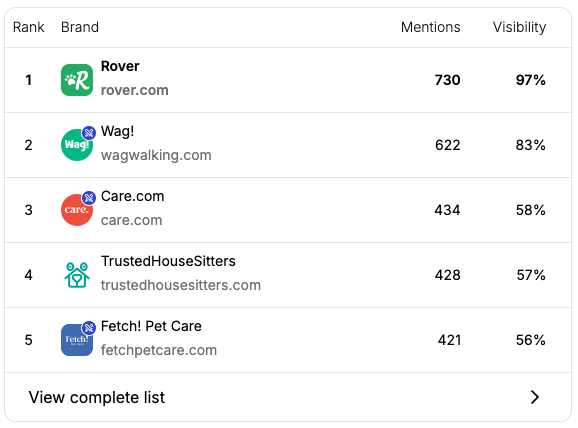
How to Build a Citation Strategy
1. Audit your current citation profile
Run a Gumshoe report and examine the citation sources section. Which sources does the AI cite when discussing your category? Are you present on those sources? This is your starting point.
2. Identify citation gaps
Compare your citation profile to your competitors'. Which sources cite them but not you? Which sources appear frequently across multiple AI responses? These gaps are your highest-priority opportunities.
3. Create citation-worthy content on your own domain
Publish content that AI models want to cite: detailed comparison pages, technical documentation, benchmarks, original research. The key is being factual, specific, and useful rather than promotional. A page that says "We serve 10,000 customers across 50 countries" gets cited. "We are the industry-leading platform" does not.
4. Strengthen your third-party presence
Get accurate, up-to-date listings on the sources AI models actually cite in your category: review platforms (G2, Capterra, Trustpilot), industry publications, comparison sites, and community forums. Engage authentically on Reddit and Stack Overflow where your product is discussed. Every third-party mention is a citation opportunity.
5. Monitor citation changes over time
Citation profiles shift as AI models update their retrieval indexes and new content is published. Scheduled monitoring through Gumshoe shows you which sources are gaining or losing influence, and whether your citation-building efforts are translating into improved visibility.
Citations Across the Buyer Funnel
Different types of citations matter at different stages of the buyer journey:
Awareness
Broad category citations: industry reports, market overviews, "best of" lists. Being included in these sources gets your brand into the AI's awareness when buyers ask general category questions.
Consideration
Comparison citations: head-to-head reviews, feature comparisons, analyst reports. These sources shape how AI models position you against specific competitors when buyers are narrowing their choices.
Decision
Validation citations: user reviews, case studies, community discussions. These sources provide the social proof that AI models cite when buyers ask "Is [brand] any good?" or "What are the downsides of [brand]?"
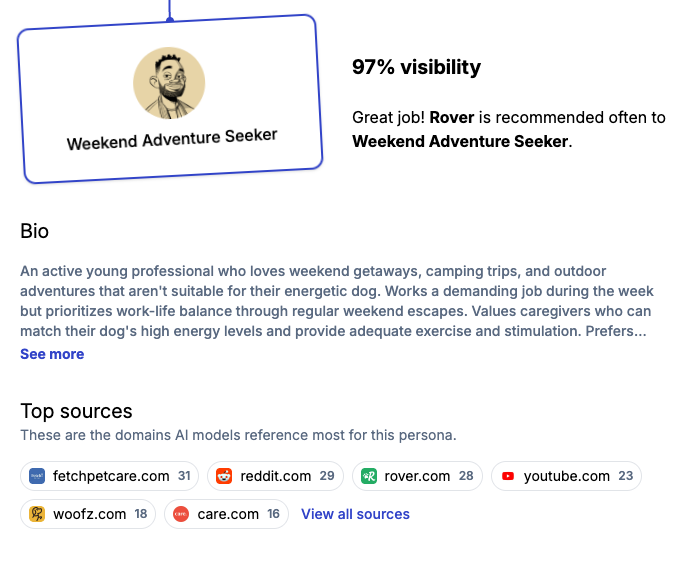
See your citation profile across every model in your audit
Run a free report to see which sources AI models cite in your category — and whether your brand is represented on them.
If you are not cited, you are not trusted
See which sources AI models rely on in your category — and build your citation strategy from real data.
Free to start · No credit card required